Rebel Creamery just handed over $23.8 million for wearing another brand’s packaging. The most important number in the case was never measured. It was sitting in the frozen food section the whole time.
Allen Adamson is Co-Founder of Metaforce, Brand Expert-in-Residence at the Berkley Center for Entrepreneurship at NYU Stern, and an expert witness in trademark, branding, and consumer perception disputes.l
This article examines the $23.8 million Van Leeuwen–Rebel Creamery trade dress ruling and how distinctive packaging, brand value and alleged infringement can be measured.
Originally published September 21, 2026 in Law.com.
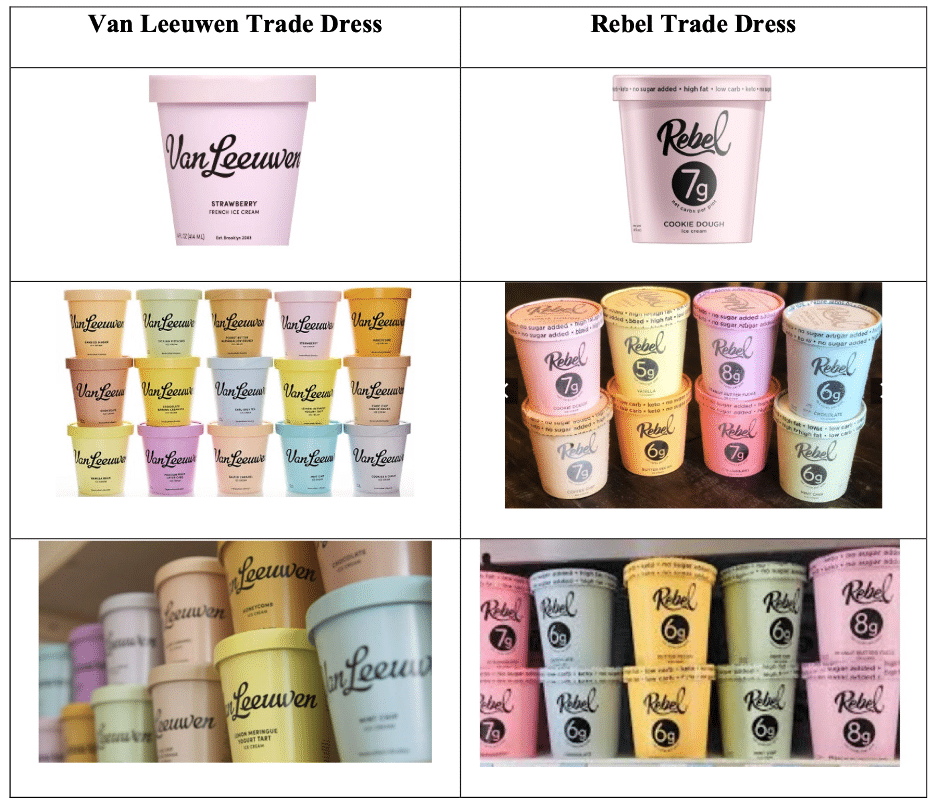
This month a federal judge in New York ordered Rebel Creamery to give up $23.8 million in profits. The offense, in plain English: Rebel’s pints looked too much like Van Leeuwen’s. Monochrome cartons. Matching lids. A pastel palette. Oversized black script. A minimalist layout Van Leeuwen spent a decade making famous. The case took five years. The court found the copying was deliberate. Store buyers had told Rebel’s founders the pints looked like Van Leeuwen’s. Nothing changed.
As a brand strategist I have no quarrel with the outcome. Van Leeuwen built something rare. A look you can spot from six feet away with no logo doing the work. That is the hardest asset in branding to create and the easiest to borrow.
My quarrel is with the math.
Nobody Measured Anything. So the Court Had to Split the Difference.
Here is how the number was built. The court added up Rebel’s profits on the pints. About $35.5 million. Then it cut the total by a third, reasoning that some shoppers bought Rebel for its keto promise, not its packaging. The rest went to Van Leeuwen.
Why a third? Not because either side measured it. Rebel argued that keto drove its sales but never put a number on how much. Van Leeuwen argued the packaging drove them but never priced that either. When nobody proves anything, the doubt goes against the copier. Fair rule, fairly applied. But the central question in the case, how much of Rebel’s success came from wearing Van Leeuwen’s look, was settled by default. Five years of fighting about value, and value was the one thing nobody measured.
Rebel had a real argument. Keto shoppers are loyal. Some would have bought those pints in a brown paper bag. Rebel lost not because it was wrong but because it arrived empty handed. In a fight about value, the side that refuses to measure loses.
Brands Collect Rent. Copiers Skip the Payment.
I think about brand value the way I think about real estate. A strong brand is a building in a neighborhood the owner spent years developing. Every sale at a premium is rent collected on that investment. Van Leeuwen put up the building. It hired Pentagram, tested seven designs, picked one, and spent a decade making pastel minimalism mean something in the freezer case.
Rebel moved in without a lease. Every pint it sold wearing that look collected rent on a property it never built. The question was never whether rent was owed. The question was how much. And that answer does not require five years in a courtroom. It requires a trip to the grocery store.
The Freezer Aisle Already Did the Math.
The frozen food section is a pricing study that runs every day, with real shoppers spending real money. Read it per ounce, since pint sizes differ, and read it in one store, since every chain sets its own prices.
At the bottom sits store brand vanilla, ice cream as a commodity, no brand doing any work. In the middle sit the keto pints in ordinary packaging. That shelf prices the keto promise all by itself. At the top sits Van Leeuwen. Even today, at big box prices, Van Leeuwen runs about 43 cents an ounce to Rebel’s 34. Shoppers pay a quarter more per ounce for the brand. And during the years this fight covers, before Van Leeuwen expanded into mass retail, the gap was far wider.
So the method is simple. Ask what a young brand with no design heritage would command on the keto shelf in ordinary packaging. Compare it to what Rebel charged wearing Van Leeuwen’s look. The difference is the rent. Multiply by pints sold. The keto premium is already priced into the middle shelf. What remains is what the borrowed look was earning.
The Lesson Is Bigger Than Ice Cream.
For brand builders, the ruling confirms what the best ones already know. A distinctive look is not a design preference. It is property. Worth building, worth documenting, worth defending. Van Leeuwen kept every brief, every rejected concept, every dated file, and that archive won the case.
For everyone else, the lesson is the number. Courts are increasingly willing to say a look has value. What they cannot do is measure it when neither side brings a measurement to the room. Until that changes, awards in these fights will be set by default instead of by evidence. That should worry both sides of every one of them.
Because the value of a borrowed look is not a mystery. The freezer aisle prices it every day.